


Reach Customers Who Are Ready to Take Action
Google Ads can put your business in front of potential customers at the moment they're actively searching for the products or services you offer. Tucker Marketing Group manages Google PPC advertising campaigns focused on reaching the right searches, generating qualified traffic, and turning advertising dollars into measurable business opportunities.
Tucker Marketing Group helps businesses in Hilton Head, Bluffton, and across the country improve visibility, attract the right audience, and turn that attention into opportunities for growth. Our small business marketing approach is built around your goals, customers, and the needs of your business.

Reach People Already Looking for What You Offer
Google PPC advertising can put your business in front of potential customers while they are actively searching for a product or service. That makes it especially useful when you need to generate opportunities, compete for valuable searches, or reach customers in specific markets.
Capture Active Search Demand
Reach people searching for the products or services your business provides, including high-intent searches that can lead to calls, form submissions, appointments, or purchases.
Target the Markets That Matter
Focus advertising by location, from Hilton Head Island and Bluffton to larger regional or national markets, depending on where your customers are.
Control Your Advertising Budget
Set budgets around your goals and adjust spending as campaign data shows which searches, ads, locations, and services are producing stronger results.
Measure What Happens After the Click
Track meaningful actions such as phone calls, form submissions, purchases, and other conversions so decisions aren't based on clicks alone.






More Than Ads. A Complete PPC Campaign
A successful Google Ads campaign involves much more than writing an ad and choosing a budget. We manage the pieces that determine where your ads appear, who sees them, what happens after the click, and how performance improves over time.
Campaign Strategy & Structure
Organize campaigns around your services, locations, priorities, and advertising goals so your account is built around how your business generates opportunities.
Keyword & Search Intent Research
Identify searches that matter to your business while separating high-value customer intent from traffic unlikely to produce meaningful results.
Ad Creation & Testing
Develop ads that connect a customer's search with the service you offer, then refine messaging as campaign performance provides more information.
Landing Page Experience
Make sure advertising traffic reaches a relevant page that matches what the customer searched for and gives them an easy next step.
Conversion Tracking
Track calls, forms, purchases, and other important actions so campaign performance can be evaluated beyond impressions and clicks.
Ongoing Optimization
Review search terms, targeting, budgets, bids, ads, and conversions to continually identify opportunities to improve campaign performance.
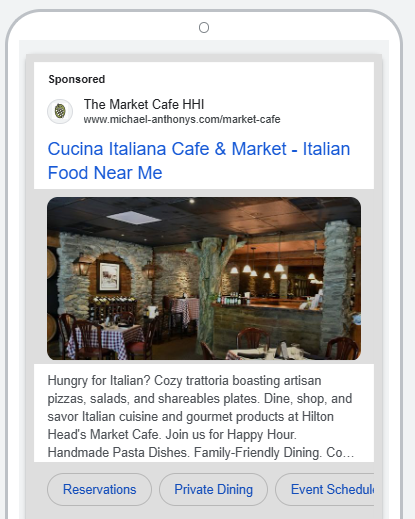
Advertising Results from Actual Clients


Different Google Ads Campaigns Serve Different Goals
Google Ads offers several ways to reach potential customers, but the right campaign type depends on what you're selling, who you're trying to reach, and what action you want customers to take. We focus on the formats that make sense for the business and the opportunity.
Search Ads
Reach people actively searching on Google for the products or services you offer. Search campaigns are often a strong fit when the goal is generating calls, inquiries, appointments, or other high-intent actions.
Performance Max
Reach customers across Google's advertising inventory through a goal-based campaign. Performance Max can complement other campaigns when conversion tracking and account data provide useful signals for optimization.
Display & Remarketing
Use visual advertising to build awareness or reconnect with people who have previously interacted with your business when immediate search intent isn't the only objective.
YouTube Advertising
Use video campaigns to reach potential customers through YouTube for awareness, consideration, remarketing, and other advertising objectives.

Put Google Ads to Work for Your Business
Let’s look at what your customers are searching for, where the opportunities are, and whether Google PPC advertising makes sense for your business and budget.

3 Reasons Google PPC Can Be Worth the Investment
Reach Customers With Active Intent
Google Search Ads can put your business in front of people who are already searching for the products or services you offer. That makes PPC especially valuable when reaching customers who may be closer to making a decision.Control Where Your Budget Goes
Campaigns can be focused around specific services, keywords, locations, schedules, and business priorities. Budgets can also be adjusted as performance data shows where stronger opportunities are coming from.Measure What Your Advertising Produces
With proper conversion tracking, PPC can connect advertising spend to phone calls, form submissions, purchases, and other important actions. That gives you better information for deciding what to improve, scale, or change.

Google Pay-Per-Click Advertising Frequently Asked Questions
-
There isn't one budget that works for every business. Advertising costs depend on your industry, competition, location, search demand, and the services or products you're promoting. We look at the opportunity first and recommend a starting budget that gives the campaign enough room to generate meaningful data and results.
-
Google Ads can begin generating traffic as soon as a campaign is active, but that doesn't mean a new campaign is fully optimized on day one. Early performance provides valuable data about search terms, ads, targeting, and conversions that can be used to improve the campaign over time.
-
Yes. Tucker Marketing Group manages campaign strategy, setup, keyword targeting, ads, budgets, search terms, conversion tracking, and ongoing optimization. We also look at the landing-page experience because what happens after someone clicks can have a significant impact on results.
-
Yes. Google Ads provides detailed campaign data, and we report on the metrics that help explain performance. Depending on the campaign, that can include advertising spend, clicks, conversions, phone calls, form submissions, cost per conversion, and other relevant results.
-
Yes, when a dedicated landing page makes sense. Sending paid traffic to a generic homepage isn't always the best approach. A focused landing page can better match the customer's search, explain the service, build confidence, and provide a clear path to contact your business.
-
Google PPC uses paid advertising to gain visibility for targeted searches, while SEO focuses on improving organic search visibility over time. They can work independently, but many businesses benefit from using both because they reach searchers in different parts of Google's results.
-
Yes. Campaigns can be geographically targeted based on the markets your business serves. For a local business, that might mean Hilton Head Island, Bluffton, or surrounding communities. Other businesses may need regional or broader targeting.
-
Performance Max is a Google Ads campaign type that can advertise across Google's inventory, including Search, Maps, YouTube, Display, Gmail, and other placements. It can be useful in the right situation, but it isn't automatically the best choice for every business. We determine campaign types based on your goals, available data, budget, and customer journey.
-
Clicks and impressions are useful indicators, but they aren't the end goal. We focus on meaningful actions such as phone calls, form submissions, purchases, appointments, and other conversions. Cost per conversion and the quality of the opportunities generated provide much better context for evaluating performance.
-
No. PPC can be extremely effective when there is sufficient search demand, a competitive offer, an appropriate budget, and a good path from the ad to conversion. In some situations, another marketing strategy may be a better use of the budget. The first step is determining whether paid search fits the business opportunity.