
The way people find businesses online is changing.
Traditional search engines remain important, but AI-powered platforms such as ChatGPT, Google Gemini, and Perplexity are introducing new ways for consumers to research services, compare providers, and make purchasing decisions.
Instead of reviewing multiple websites, consumers can ask detailed questions and receive conversational answers that summarize information from different sources. For businesses, this creates another opportunity to be found, evaluated, and recommended online.
Recent research from Birdeye's State of AI Search 2026 report offers valuable insight into how AI platforms reference business information and what influences visibility. The findings reinforce an important message: businesses need more than a website and a few directory listings to establish a strong online presence.
“Understanding how website content, local business profiles, customer reviews, and third-party citations work together can help businesses strengthen their visibility across both traditional and AI-powered search,” says Mike Tucker, owner of Tucker Marketing Group




GET STARTED TODAY
Take the first step toward smarter, more effective marketing.
CONTACT US → 843-681-7827From Traditional Search Rankings to AI-Generated Answers
For years, online search followed a familiar process. Someone entered keywords into Google or Bing, reviewed the results, and visited websites to gather information. Businesses competed for visibility through search engine optimization (SEO), local listings, and paid advertising.
Today, AI-powered search allows consumers to ask more specific questions.
For example, someone searching for a roofing contractor might traditionally enter "roofing companies Hilton Head Island." With AI search, that question could become:
Which roofing contractors in Hilton Head Island have strong customer reviews and experience installing metal roofs?
AI platforms can interpret these more detailed requests and assemble answers using information from websites, business profiles, directories, and other available sources. This introduces an important distinction between traditional SEO and AI search optimization.
Traditional SEO focuses on helping websites appear prominently in search results. AI search optimization, sometimes called Generative Engine Optimization (GEO), also considers how a business is understood, represented, and referenced within AI-generated answers.
A business may rank well in Google without appearing in a particular AI-generated recommendation. Conversely, a business may be mentioned in an AI answer even when its website does not occupy the highest position in traditional search results. The goal is not to replace SEO with AI optimization. It's to build on established search marketing practices while adapting to new ways consumers find information.
What the 2026 AI Search Research Reveals
Birdeye's State of AI Search 2026 report examined how ChatGPT, Gemini, and Perplexity cite businesses across thousands of local-intent prompts. One of the most significant findings involves the role of business-owned websites.
These findings suggest that simply having a website is not enough. Businesses need to publish information that AI systems can identify, interpret, and potentially reference when responding to relevant questions.
They also demonstrate why businesses should not rely exclusively on outside directories and review platforms to describe their services.
The Four Elements That Support AI Search Visibility
AI-powered search systems may consult multiple sources when evaluating businesses. Birdeye's research identifies four important categories that contribute to how businesses appear in AI-generated answers.

Website Content
Your website provides the greatest control over how your business is presented online. Detailed service pages, location-specific content, FAQs, professional qualifications, and accurate business information help establish what your company does and whom it serves.
For example, a remodeling contractor with dedicated pages explaining kitchen renovations, home additions, and custom home construction provides more useful information than a website containing only a brief list of services. The objective is to answer customer questions clearly while demonstrating relevant expertise.

Business Profiles
Google Business Profile, Apple Business Connect, and other established online profiles help reinforce business information, particularly for local searches. Accurate contact details, service categories, operating hours, locations, and business descriptions make it easier for customers and search platforms to identify relevant companies. Inconsistent information can create confusion. Maintaining complete, accurate profiles supports a stronger online presence.

Third-Party Citations
Business citations include references to a company on directories, industry websites, professional associations, and other online publications. These sources can help corroborate business details and establish credibility beyond a company's own website. However, quality matters more than quantity. A relevant industry association or established local organization may provide greater value than numerous unrelated directory listings.
It's also important to distinguish traditional business citations from citations in AI-generated answers. The former generally refers to business mentions or listings, while the latter identifies sources an AI system references in its response.

Customer Reviews and Reputation
Customer reviews provide insight into service quality, reliability, and customer satisfaction. Reviews may also contain useful details about specific services, customer experiences, and locations that help distinguish one business from another.
A consistent process for earning authentic reviews and responding professionally to customer feedback supports both reputation management and local search marketing. Although positive reviews do not guarantee AI recommendations, they contribute to the broader information available when consumers and AI systems evaluate businesses.

Why Your Website Is Your Most Valuable Marketing Asset
Social media platforms, online directories, and review websites all play important roles in digital marketing. However, your website remains the central source of information you can directly manage. Birdeye's research found considerable variation in how often business-owned domains were cited in AI-generated answers. Some companies had a strong presence among cited sources, while others were not cited at all. This reinforces the importance of developing website content and design that provides meaningful answers rather than simply promoting services.
A well-developed website does more than present a company's services. It should communicate expertise, establish geographic relevance, and provide the information prospective customers need to make informed decisions. Achieving this requires a coordinated approach to website structure, content development, technical optimization, and the signals that help search engines and AI platforms understand a business.
As AI-powered search continues to evolve, businesses must also consider how effectively their websites address customer questions and demonstrate authority within their industries. Simply adding more pages or publishing frequent blog posts is not enough. Strategic content development, supported by ongoing SEO and AI search optimization, helps position a website as a credible and relevant source of information while supporting broader marketing objectives.
Local SEO and AI Search Work Together
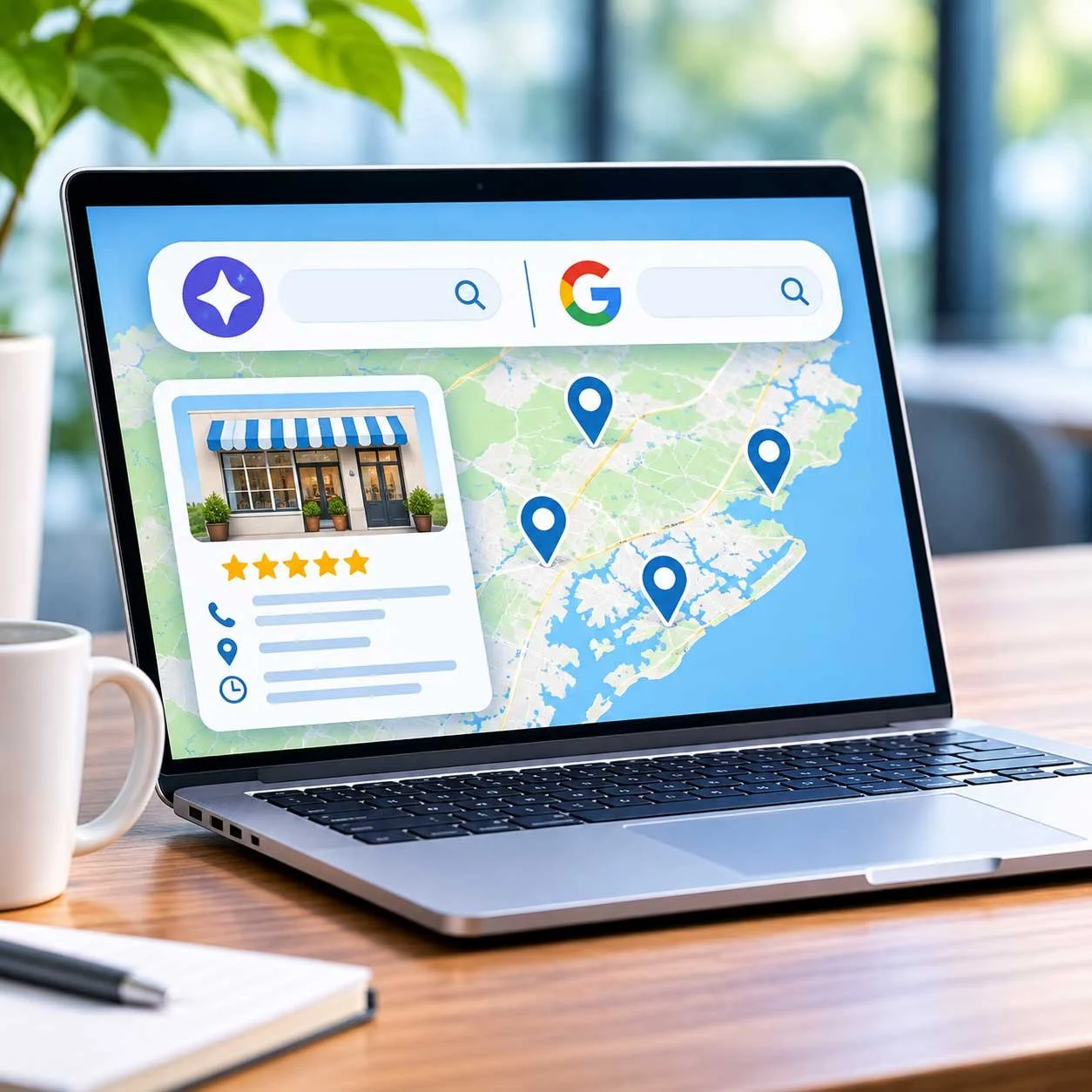
Local businesses have additional considerations because customers frequently search for services within specific geographic areas. A homeowner looking for a roofing contractor in Bluffton, South Carolina, has different needs from someone researching roofing materials nationally. AI-powered search tools may consider location relevance, service availability, business profiles, customer reviews, and other sources when answering geographically specific questions.
Businesses can strengthen their local presence by maintaining accurate Google Business Profiles, publishing meaningful location-specific website content, and ensuring consistent business information across relevant platforms.
For companies serving multiple communities, dedicated location pages can help explain geographic coverage and local experience. However, location pages should provide genuine value. Repeating identical content while changing city names does little to help customers understand a business.
Strong local content might include completed projects, community-specific service considerations, geographic coverage, or answers to questions commonly asked by customers in that market. These practices support traditional local SEO while providing clearer information for AI-powered search experiences.
Why Industry Reputation Matters in AI Search
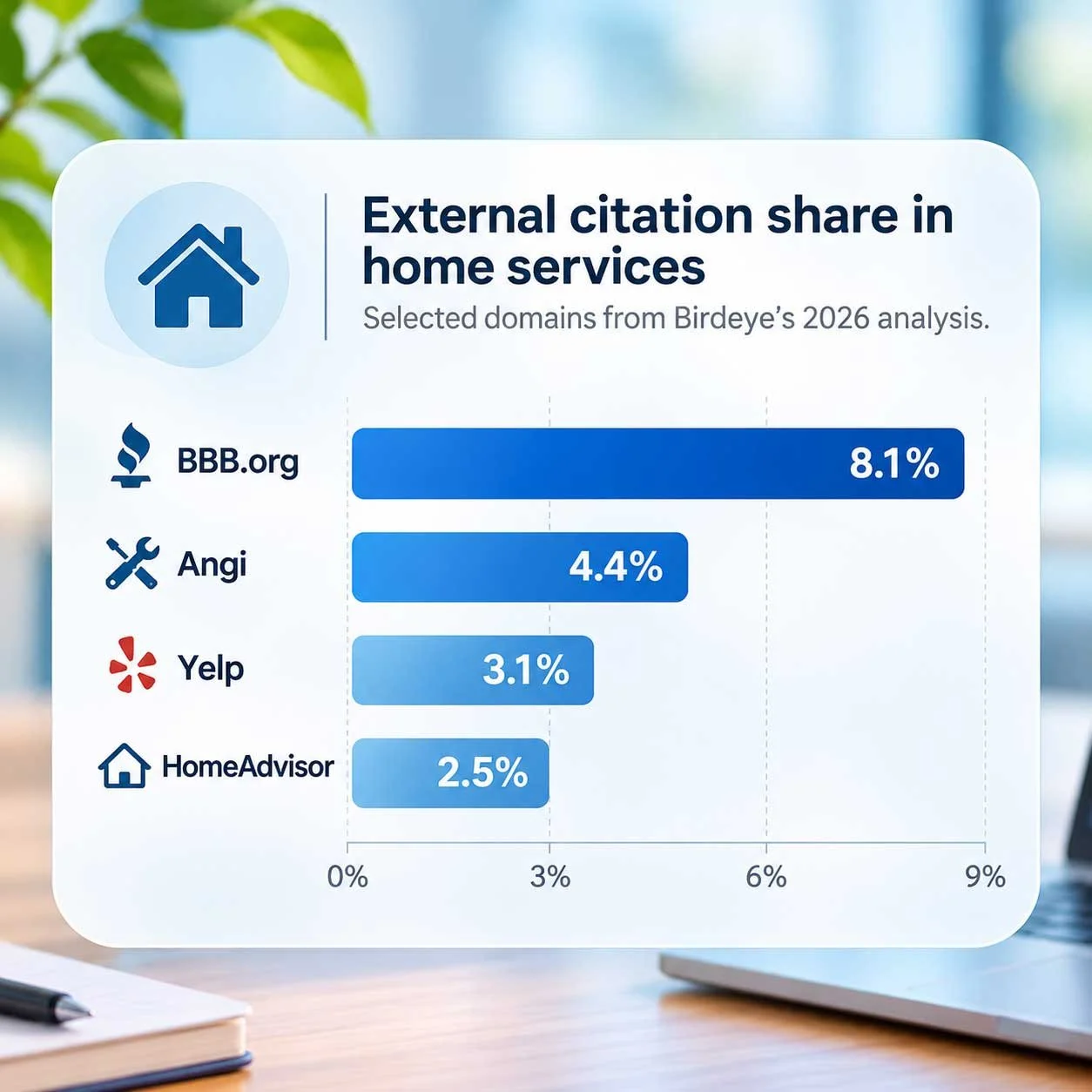
Birdeye's research also examined how external citations differ across industries. For home service businesses, established reputation and consumer information platforms appeared prominently in its findings. This highlights the potential importance of credible third-party platforms for contractors, roofing companies, HVAC providers, and other home service businesses.
In healthcare, Birdeye identified specialized platforms such as Healthgrades and WebMD among the external sources cited in its analysis. This suggests that the sources relevant to AI visibility can differ substantially by industry. The practical lesson is that businesses should identify which reputable platforms matter most to their customers and industry rather than treating every directory as equally important.
How Businesses Can Prepare for AI Search
Improving AI search visibility does not necessarily require abandoning existing marketing strategies or adopting an entirely new collection of software. Many of the most valuable improvements build on established SEO, website development, and reputation management practices.
Here are seven areas worth prioritizing.
Evaluate your existing website. Review service pages, location information, FAQs, credentials, and important business details for accuracy and completeness.
Strengthen your most important content. Expand pages that lack useful information, answer common customer questions, and remove outdated or repetitive material.
Review your Google Business Profile. Confirm that services, categories, contact details, operating hours, and business descriptions are accurate.
Evaluate third-party listings. Prioritize reputable industry directories, professional associations, and relevant local business organizations.
Maintain an active review strategy. Encourage authentic customer feedback and respond professionally to reviews.
Test your visibility in AI search. Ask relevant questions across platforms such as ChatGPT, Gemini, and Perplexity to evaluate how your business is represented.
Monitor results and make adjustments. Review traditional SEO performance, website traffic, inquiries, and available AI visibility information to identify opportunities.
Helping Businesses Build Visibility Across Traditional and AI Search
Tucker Marketing Group helps businesses adapt to changing search technologies through coordinated digital marketing strategies that strengthen visibility, credibility, and customer engagement. Our approach combines search engine optimization, Generative AI Search Optimization, website content development, and Google Business Profile Optimization.
Rather than treating each marketing channel as a separate activity, we focus on developing a consistent online presence that supports how customers research, evaluate, and choose businesses.
Interested in understanding how your business is positioned for AI-powered search? Contact Tucker Marketing Group to discuss your current online visibility and opportunities for improvement.
