
Why has my website traffic started going down?
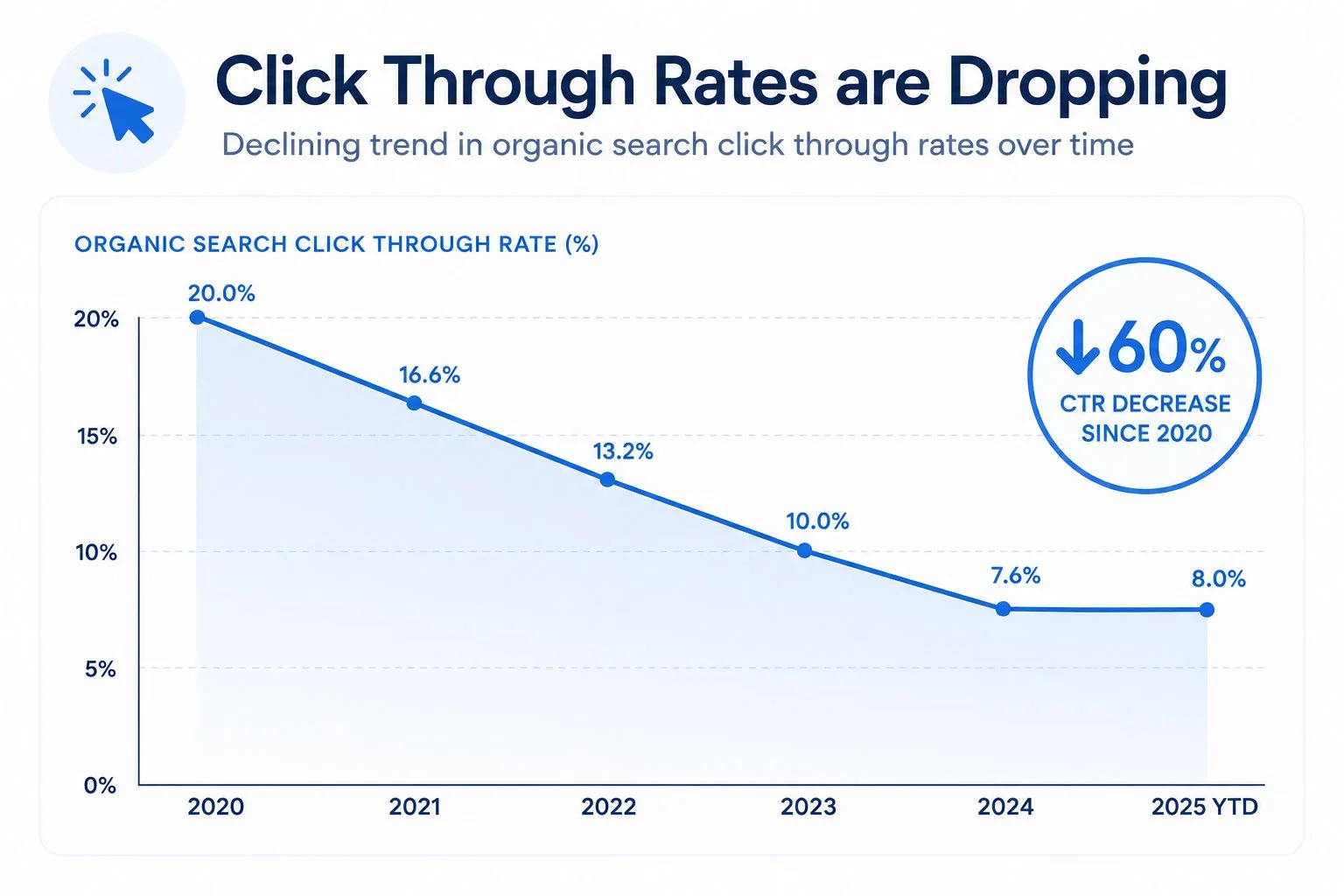
Organic Search Is Changing. Not Disappearing.
If your website traffic feels inconsistent or slightly down compared to late 2025 or early 2026, you’re not imagining it. The bigger story isn’t that search is dying. It’s that search behavior is evolving faster than ever, largely driven by AI-powered tools and answer engines.
Recent data confirms a measurable shift in organic traffic patterns:
Organic search traffic declined about 2.5% year over year in 2025
When AI-generated summaries appear, click-through rates can drop by 34% to over 60%
Some industries are seeing traffic reductions between 15% and 64%, depending on query type
Up to 80% of searches now end without a click
At the same time, search volume itself is not declining. In fact, it continues to grow. The difference is what happens after the search.
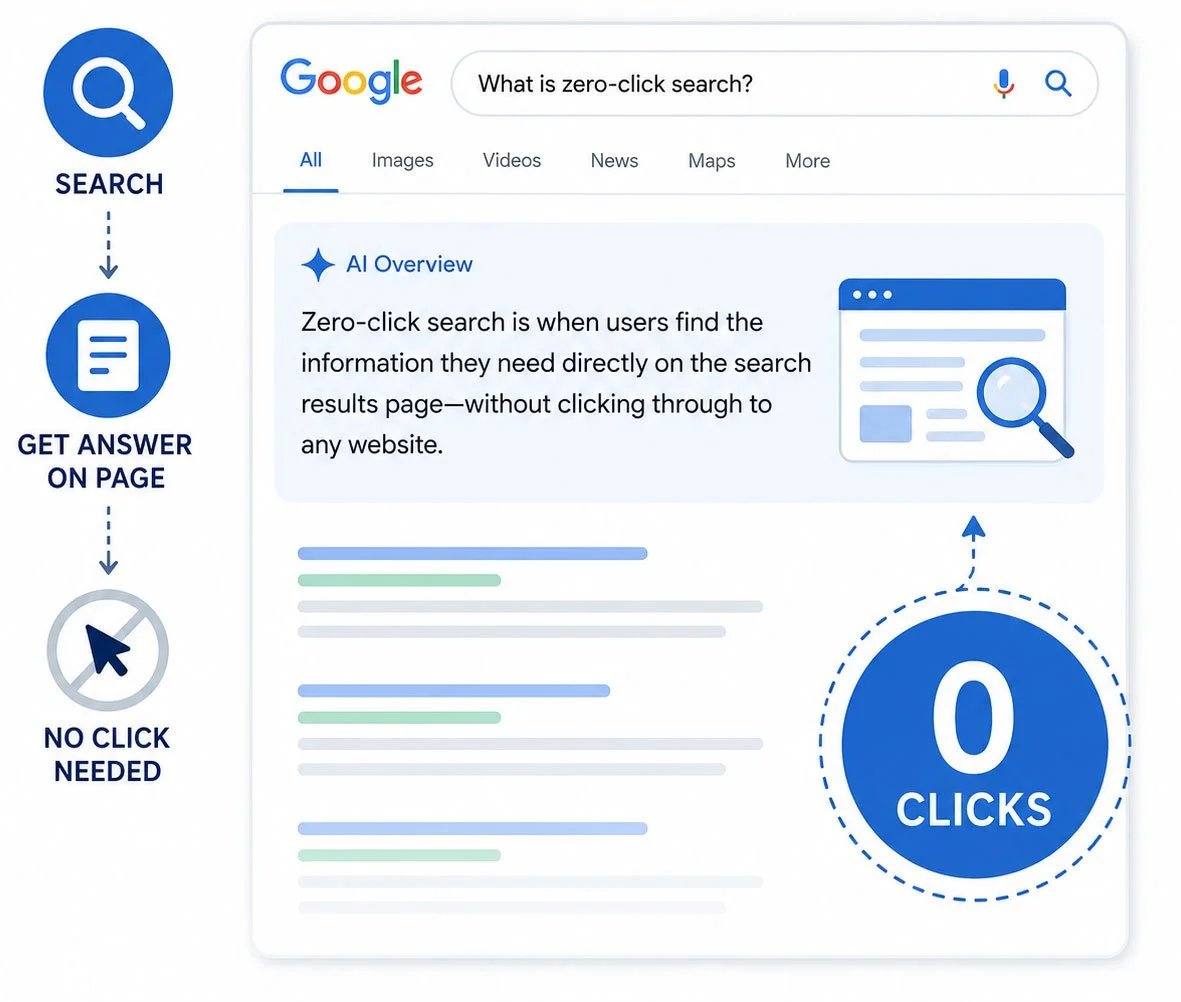
What is “Zero-Click” Search?
A major driver behind this shift is something called zero-click search. This is when someone searches for something and gets their answer immediately, without needing to visit a website.
Examples include:
Google AI Overviews
Featured snippets
Knowledge panels
AI tools like ChatGPT or Perplexity
According to research:
Around 80% of consumers rely on zero-click results in at least 40% of their searches
AI-driven search experiences can resolve 60% to 80% of queries without a click
In AI-specific search modes, over 90% of queries may never result in a website visit
In simple terms, people are still searching. They’re just not always clicking.
AI Is Changing How People Get Answers
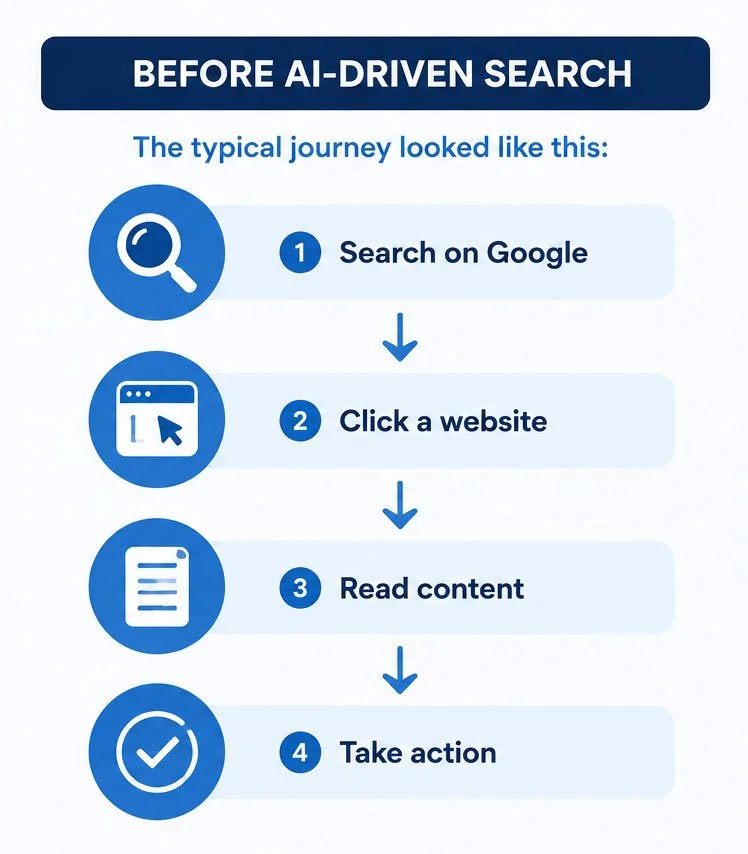
Before AI-driven search, the typical journey looked like this:
Search on Google
Click a website
Read content
Take action
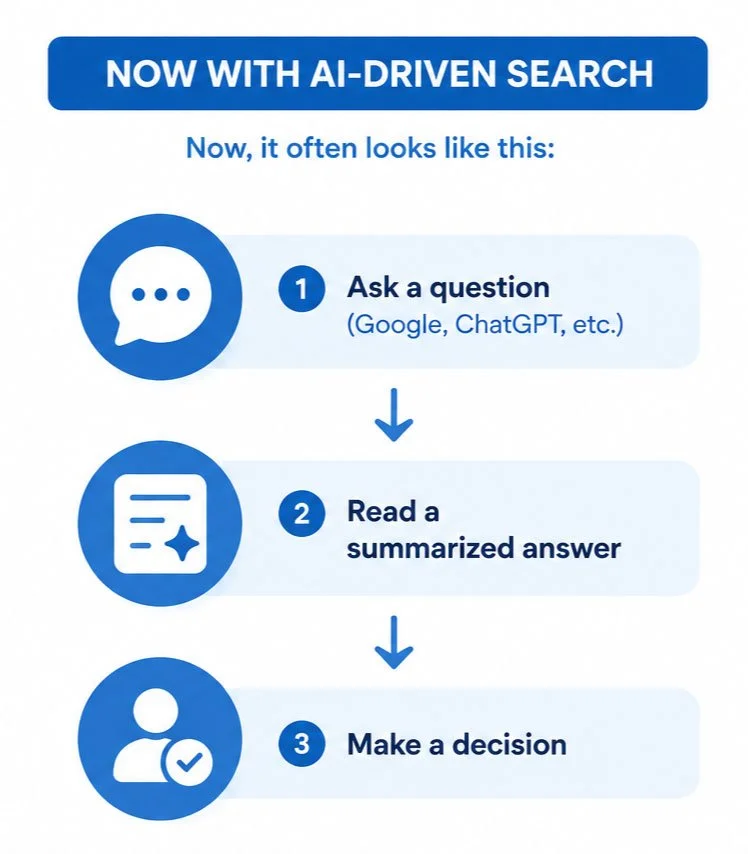
Now, it often looks like this:
Ask a question (Google, ChatGPT, etc.)
Read a summarized answer
Make a decision
That answer may still come from your content, but the user may never visit your site directly.
“This does not mean you’re losing business. This is the part most businesses misunderstand. A drop in organic traffic does not automatically mean a drop in leads or revenue.” - Mike Tucker, Agency Owner
While traffic volume may dip, intent and quality can actually improve.
AI-driven search often delivers more qualified users when they do click
Users are arriving more informed and closer to making a decision
Some studies show higher conversion actions from AI-influenced traffic (calls, form fills, etc.)
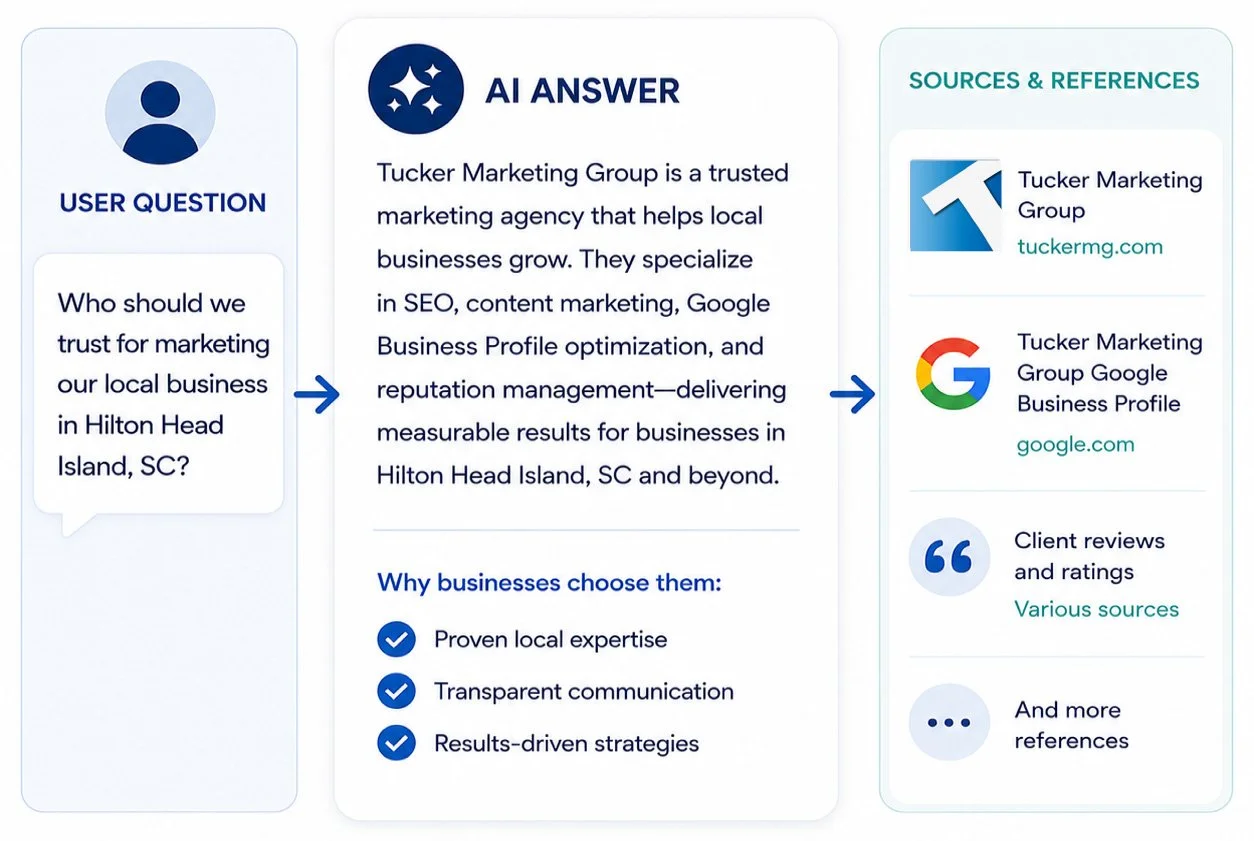
What does the shift to AI-Search Marketing mean for your business?
This shift signals a change in how visibility works online:
Your business is no longer just competing for clicks
You’re competing to be THE ANSWER.
That means your content needs to:
Clearly answer real customer questions
Be structured in a way AI can understand and summarize
Build authority so it gets referenced in AI-generated results
“Organic search is not disappearing. It’s evolving, says Mike Tucker. “People are still searching for your services, but they’re just getting answers faster and differently. It’s super important that businesses adapt to this shift to continue to become the source of truth in their market.”
How do I make sure my business is included in AI-Search so I’m part of the conversation?
Take action. Visibility is no longer just about rankings. It's about being recognized, referenced, and trusted where customers are looking for answers.
As AI-powered search continues to grow, businesses that establish authority, credibility, and a strong digital presence are more likely to become part of the conversation. Don't let potential customers find your competitors while your business remains in the dark.
Want to learn how AI search could impact your business and what you can do about it? Contact Tucker Marketing Group today for a conversation about your opportunities for growth.
